The practical, beautiful exterior choice for Nevada homeowners. Professional installation, written warranty, and upfront pricing.
Get a Free Vinyl Estimate: +1-844-782-0929
Our crews install vinyl every week. That repetition builds genuine skill -- tighter joints, proper expansion gaps, and correct fastener technique that holds up season after season.
Choosing vinyl siding involves more than picking a color. We discuss profile style, panel width, trim coordination, and how different finishes photograph in natural light on your home.
Vinyl siding needs room to expand and contract with temperature changes. Incorrect nailing tension or missed expansion gaps cause waves, buckling, and panel pop-out. We install to manufacturer specifications on every project.
Every vinyl siding project we complete in Nevada includes a written workmanship warranty alongside the manufacturer product warranty. You have coverage on both the materials and the installation labor.
From the initial substrate check through final trim detail, our installation crews handle every step. Clean, precise, and built to last through Nevada, TX's seasonal shifts.
Replacement projects give us the opportunity to address substrate issues that old siding concealed. We never cover problems -- we fix them and document our findings for your records.
Insulated vinyl siding incorporates a foam backing that improves thermal performance, adds panel rigidity, and provides a quieter exterior. A strong choice for Nevada, TX homes with high energy costs or thin wall assemblies.
We install vinyl shake on full elevations and as accent panels alongside horizontal lap siding. Proper alignment and starter strip placement keep the staggered courses looking intentional, not ragged.
Vertical vinyl panels and board-and-batten profiles suit contemporary and farmhouse-style homes particularly well. We install vertical systems with proper furring strips for drainage and correct J-channel terminations at top and bottom.
Vented soffit keeps your attic breathing while blocking pests. We size vent panels correctly for your attic square footage and install them with the same care as the field siding -- no shortcuts on trim work.
Standard grade vinyl (typically .040" thick) is adequate for mild conditions and budget-conscious projects. Premium grades (.044" and above) hold shape better in temperature extremes common to Nevada, TX and resist denting from impact more effectively. We specify grade based on your home's exposure, not upsell pressure.
Thickness is measured in thousandths of an inch (mils or gauge). Thicker panels feel more solid, flex less in wind, and generally carry longer fade warranties. We provide thickness comparisons from the brands we carry so you can make an informed choice.
Insulated vinyl costs more upfront but reduces heating and cooling load, eliminates panel flex noise, and adds perceived quality. For Nevada homeowners dealing with significant temperature swings, the energy offset can narrow the price gap over a decade of ownership.
We stock impact-rated options and recommend them for exposed elevations. Manufacturer documentation on impact ratings is available on request -- you should know what you are installing before work begins.
We assess your home, discuss grade and style options, and deliver a written estimate with material and labor broken out. No vague totals, no pressure.
Once you approve the estimate, we finalize your style and color selection using physical samples on your home, then place the material order. Lead times are confirmed before your install date is scheduled.
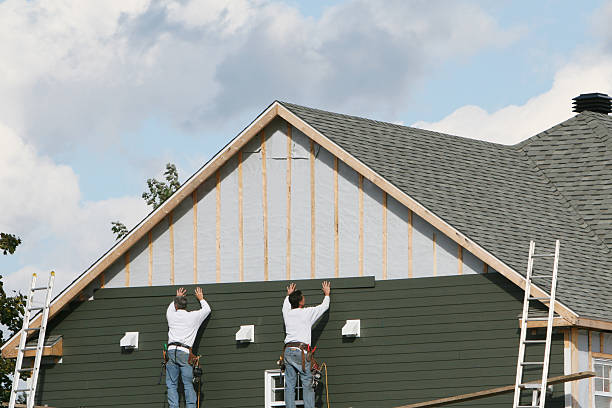
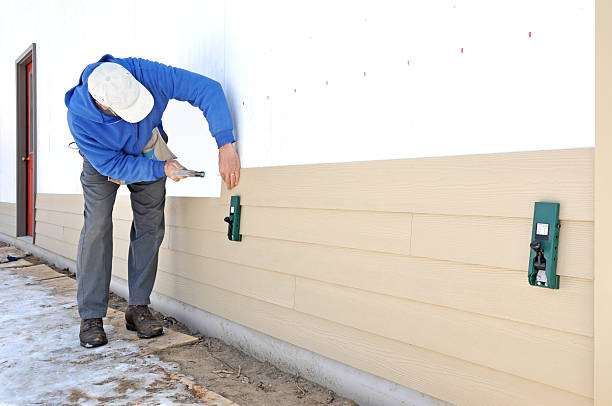
Our crew prepares the substrate, installs starter strips and corner posts to spec, and works systematically across each elevation. Every panel goes on at the correct tension, with proper overlap and expansion allowances.
Your sign-off comes only when you are satisfied. We resolve any punch-list items before leaving the site and leave you with a clear record of what was installed and what is covered.
Vinyl siding is manufactured from polyvinyl chloride (PVC) resin compounded with stabilizers, pigments, and impact modifiers. The resulting panels are extruded at consistent thickness, then embossed with surface textures that mimic wood grain, cedar shake, or smooth lap board. Because the color runs through the full thickness of the panel rather than sitting as a surface coat, minor scratches and scuffs do not expose an underlying substrate. This characteristic distinguishes vinyl from painted wood or fiber cement and contributes directly to its maintenance advantage.
The physical behavior of vinyl in Nevada, TX's climate is the central installation challenge. PVC expands considerably with temperature increases and contracts in cold. Panels installed on a mild spring day will be in a different dimensional state than the same panels on a July afternoon or a January morning. A professional crew nails into the center of the elongated nail slots so each panel floats freely within the designed tolerance. Driving nails tight -- even one or two per panel -- creates a fixed point around which thermal stress concentrates, producing the waves and buckles homeowners associate with cheap installation. The material itself is not cheap; the technique was.
Vinyl siding grades are measured primarily by panel thickness, expressed in thousandths of an inch. Products at the lower end of the market measure around .040 inches. Premium lines reach .044 to .050 inches or more. Thicker panels carry greater impact resistance, flex less in high winds, and maintain a flatter profile over long spans between studs. They also tend to carry more favorable fade warranties from manufacturers, because the pigment loading in premium grades is formulated for longer color stability under UV exposure. For most standard residential applications in Nevada, a mid-range to premium thickness is a reasonable specification. Budget-grade panels are appropriate for low-exposure applications like enclosed porches or garage elevations with minimal sun and wind exposure.
Insulated vinyl siding takes the standard product and bonds a layer of contoured XPS or EPS foam to the back face. This foam layer does several things simultaneously. It increases the thermal resistance of the wall assembly modestly but consistently, typically adding between R-2 and R-4 to the exterior envelope depending on foam thickness. It eliminates the hollow-drum sound that standard vinyl produces when rain or hail strikes it. It also adds panel stiffness, which reduces oil-canning (the slight waviness visible on flat panels in raking light) and provides a more solid feel when the panel is pushed or struck. For older homes in Nevada, TX with thin wall assemblies or insufficient insulation, the thermal contribution of insulated vinyl is a meaningful bonus on top of a new exterior appearance.
Cleaning vinyl siding requires very little effort compared to painted wood. Most surface dirt and mildew washes off with a garden hose and a soft brush. For more stubborn mildew, a diluted solution of white vinegar and water or a vinyl-specific cleaning product removes organic growth without damaging the panel surface. Pressure washers used at low pressure and kept away from panel joints are effective. High-pressure streams directed under the panel laps force water behind the siding and create exactly the moisture infiltration the system is designed to prevent. Cleaning vinyl two to three times per year in Nevada, TX keeps it looking fresh without significant time investment, and no repainting is ever required.
Properly installed vinyl in Nevada, Nevada, TX holds up for a long time when the installation fundamentals are correct. Warranty documents from reputable manufacturers cover decades of product performance. What they do not cover is installation error, which is why workmanship warranty from your contractor matters as much as the product warranty itself. When you invest in a new exterior, the contractor's commitment to their own work is the most meaningful assurance of long-term performance. We back ours in writing.
"I was nervous about committing to a color without seeing it on the house. SOS Roofing and Siding brought samples out, held them up against different elevations, and we made a confident decision. The finished result looks exactly as we imagined."
"We went with insulated vinyl after SOS Roofing and Siding explained the difference honestly. Our heating bills the first winter after installation dropped noticeably. I cannot say it is all from the siding, but the difference is real and the house is quieter in rain storms."
"Replacing our failing vinyl revealed substrate damage we didn't know existed. SOS Roofing and Siding showed us photos, explained the repair, and handled it as part of the project without a runaround. Excellent communication throughout."
"Crew showed up on time every day, cleaned up every evening, and finished ahead of the original schedule. The soffit and fascia match the siding perfectly. The whole exterior transformation has our neighbors asking who we used."